
Modernizing an 8-year-old TMS Without Disrupting Operations
How a 750+ tractor carrier upgraded its enterprise Transportation Management System, migrated to new hardware, and kept operations running across 33 terminals.
Customer Overview
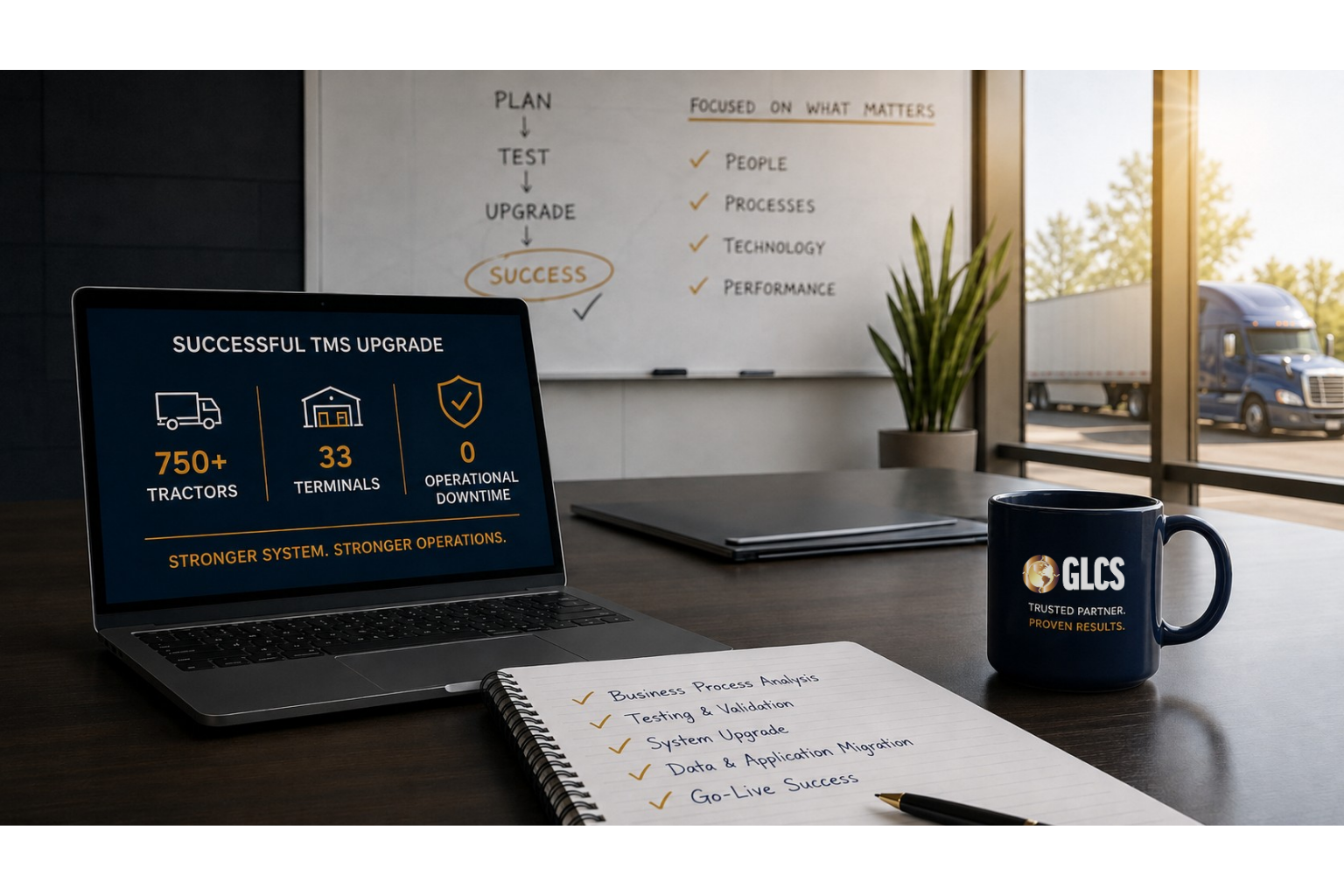
A large trucking company with more than 750 tractors and 33 terminal locations was operating on an eight-year-old version of its enterprise Transportation Management System (TMS).
The system supported critical operations across the business, including dispatch, EDI, mobile communications, reporting, business intelligence, and several other integrated applications.
With a move to a new hardware platform planned, the company had an opportunity to modernize its technology environment. But upgrading a system this deeply connected to daily operations required much more than installing a newer version of the software. Choosing the right path for a TMS starts with understanding how the operation actually works.
The Challenge
Years of system use had created established processes, workflows, integrations, and dependencies across multiple terminals.
Before beginning the upgrade, the company needed to understand not only how the software was configured, but how employees were actually using it every day.
The project also involved multiple interconnected systems, including:
Core TMS operations applications
EDI
Mobile communications
Reporting and Business Intelligence
Databases and infrastructure
Other integrated third-party applications
With 33 terminals depending on these systems, downtime or unexpected issues during the transition could have a significant operational impact.
The GLCS Approach
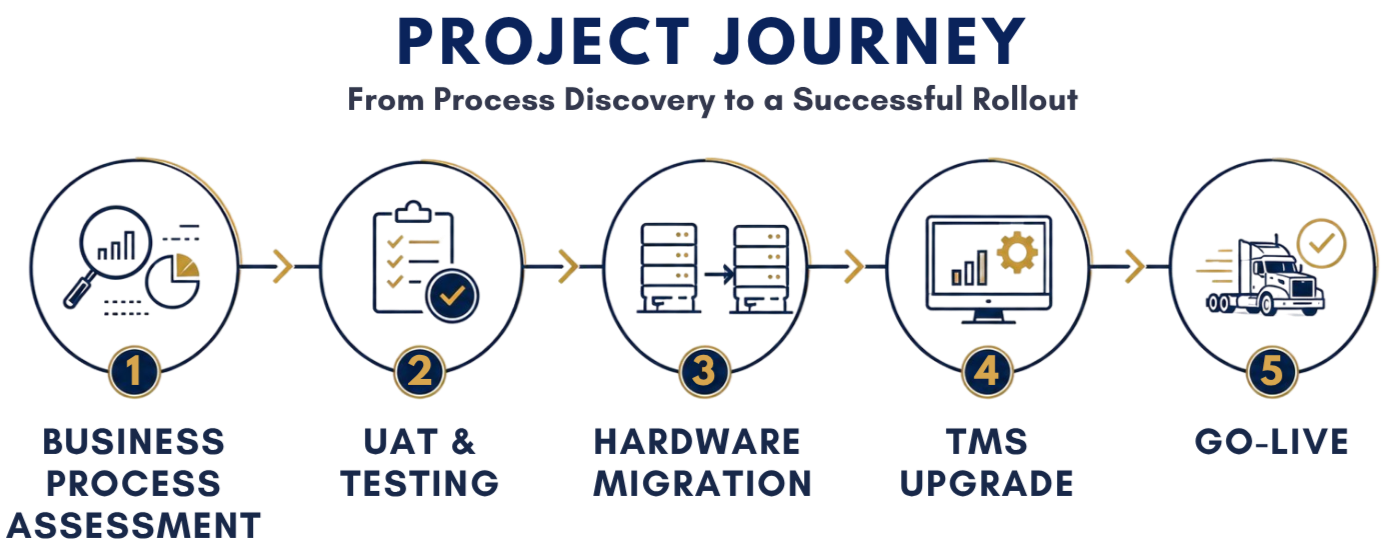
GLCS helped manage the project from business process discovery through testing, migration, and go-live.
Understanding How the Business Actually Used the TMS
Before beginning the technical upgrade, GLCS conducted a comprehensive Business Process Assessment (BPA) across the organization.
The team performed shadow visits at the main office and remote terminals around the country, following employees through the complete order-to-cash lifecycle.
Rather than relying solely on documented processes, GLCS observed how teams were actually using the system day-to-day.
The resulting BPA documented:
Current system usage and workflows
Differences in processes across locations
Opportunities for process improvements
Potential risks and areas of concern for the upgrade
Considerations that needed to be addressed before migration
This gave both GLCS and the customer a clearer picture of the environment before any changes were made.
Building a Structured Testing Process
GLCS developed a detailed User Acceptance Testing (UAT) plan covering the workflows and functionality employees relied on most.
The upgrade was first completed in a test environment, where GLCS executed UAT scenarios and identified issues, adjustments, and recommendations.
Once the test environment was validated, the customer used the same testing criteria to conduct its own internal UAT.
This structured approach helped uncover potential issues before they reached the production environment.
Planning the Upgrade and Migration
Following successful testing, GLCS developed a detailed schedule for the production upgrade and migration.
The project included:
Provisioning the new hardware environment
Migrating databases and applications
Upgrading the TMS and supporting applications
Validating integrations and critical workflows
Coordinating activities across the broader technology environment
Supporting the customer through go-live
The goal was to reduce surprises during the transition and keep the systems employees depended on available throughout the process.
For carriers, the work also doesn’t necessarily end at go-live. Ongoing TMS support can become especially important as integrations, custom workflows, and business requirements evolve.
The Results
No Operational Downtime Across 33 Terminals
The upgrade and migration were successfully completed without downtime that impacted the company's operations across its 33 terminal locations.
A Current, More Sustainable TMS Environment
The company moved from an eight-year-old version of its TMS to a current platform while also transitioning to its new hardware environment.
This provided a stronger technology foundation for ongoing support, system improvements, and future growth.
Processes Improved Alongside the Technology
Because the project began with a Business Process Assessment, the customer gained more than a software upgrade.
GLCS identified opportunities to improve processes, documented how teams were using the system across locations, and surfaced potential issues before they could affect the transition.
Greater Confidence at Go-Live
Detailed testing by both GLCS and the customer helped ensure that critical workflows, applications, and integrations had been validated before production migration.
Instead of discovering problems after go-live, the team was able to identify and address many of them in the test environment.
Where GLCS Fits
A major TMS upgrade isn't just a software project.
For trucking companies, the TMS touches dispatch, drivers, customers, billing, integrations, reporting, and nearly every part of the operation. Changes in one area can quickly create problems somewhere else.
GLCS helps trucking and logistics companies manage complex technology projects with support that connects the technical work to the way the business actually operates, including:
Business Process Assessment to understand current workflows and identify opportunities for improvement
TMS Upgrades & Implementations to plan, test, migrate, and support major system changes
Project Management to coordinate internal teams, vendors, timelines, and dependencies
Application Managed Services to support systems after go-live
Integrations & Development to keep TMS, telematics, EDI, reporting, and other systems working together
The goal isn't simply to get the new software live.
It's to make sure the technology works when the business starts using it.
Planning a TMS upgrade, migration, or major system change?
GLCS helps trucking and logistics companies plan, test, and manage complex technology projects with the operational side of the business in mind.