
From Manual Filing to Automation: How a Fuel Hauler Improved Document Processing
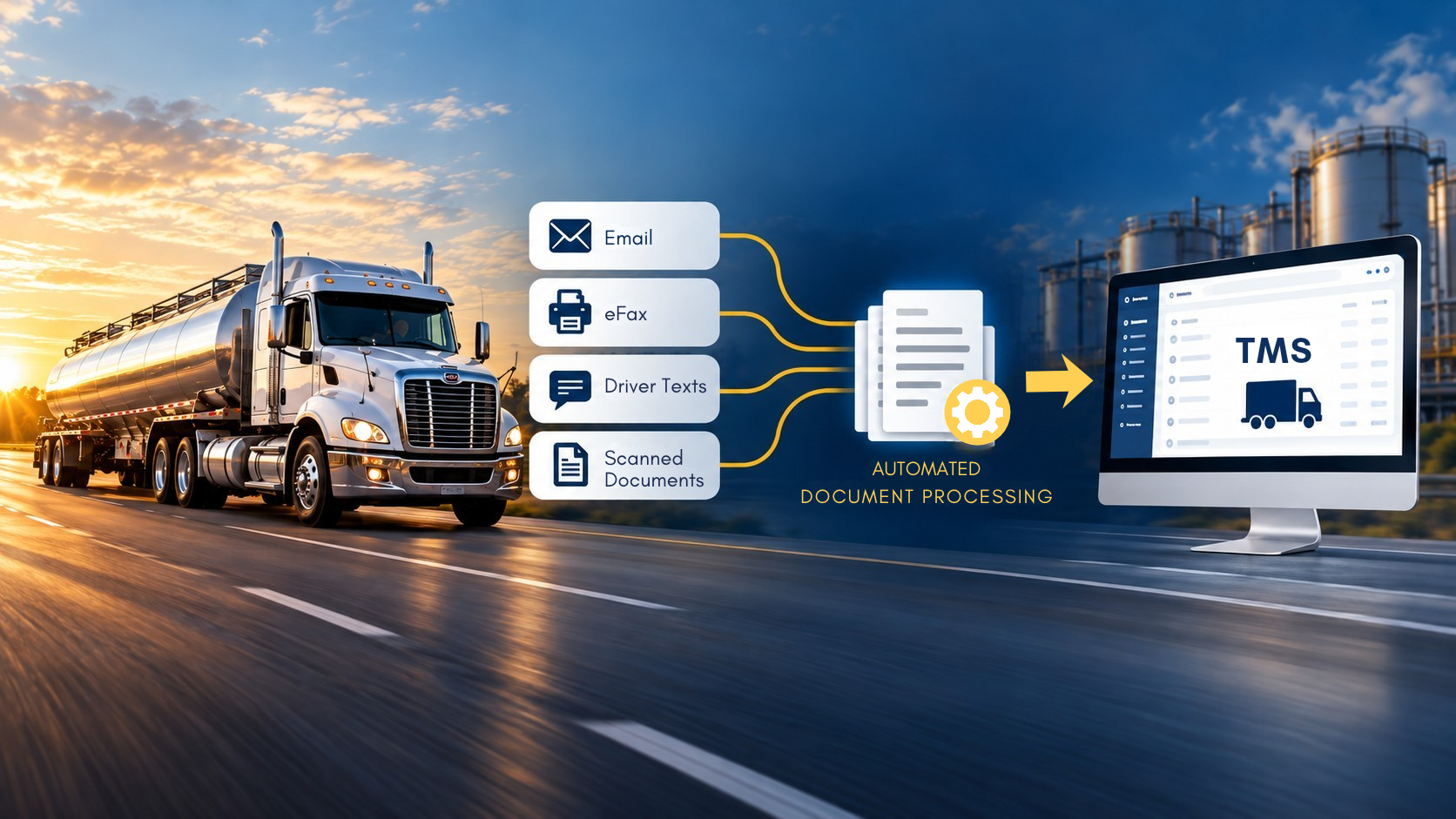
How one carrier replaced a manual, fragmented document process with a workflow that automatically routes documents to the right shipment in its TMS.
The Challenge
The carrier received documents in nearly every way possible: email, eFax, text messages from drivers, and hard copies.
The problem wasn't simply receiving them. The existing solution couldn't consistently handle the different formats, and it had no way to determine where each document belonged in the TMS.
Employees were left reviewing documents, matching them to the right shipment, and filing them manually.
For a busy trucking operation, those extra steps add work without adding much value.
The carrier wanted to reduce manual effort, but they also needed a solution that would work with the TMS, fit how their team actually operated, and make the process easier, not introduce another system employees had to work around.
Finding the Right Solution
GLCS started by looking at the carrier's existing process and researching document imaging solutions that could handle its mix of document sources and work within its technology environment.
After evaluating the options, GLCS narrowed the field to three solutions and walked the customer through each option's pros and cons, along with our recommendation.
The carrier selected the solution GLCS recommended.
That was only the beginning.
Choosing the technology mattered, but making it work with the carrier's systems, processes, and people would ultimately determine the project's success.
Managing the Implementation
Because the project touched the TMS, integrations, employee responsibilities, and daily workflows, GLCS broke the implementation into four phases.
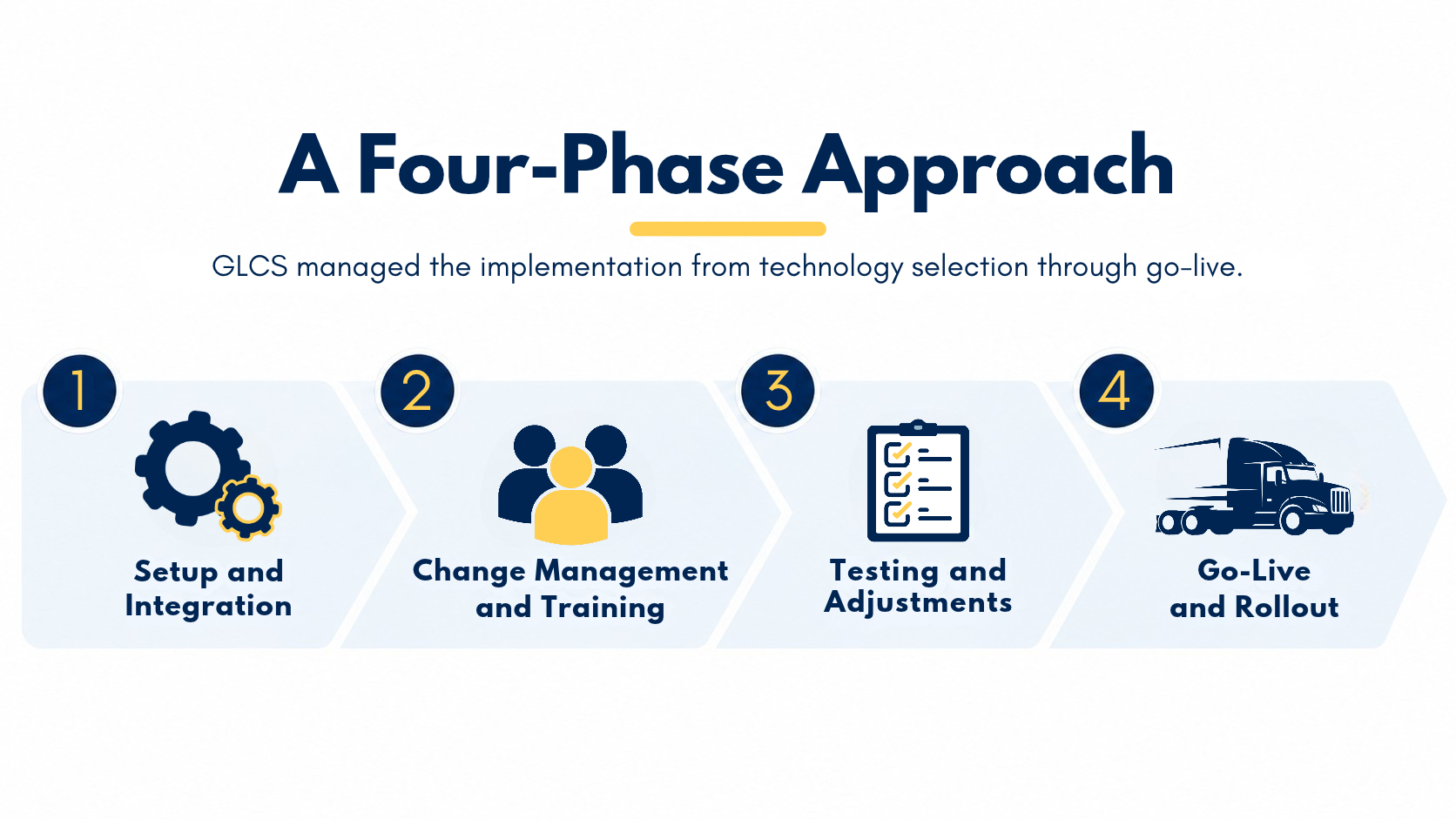
Phase 1: Setup and Integration
GLCS coordinated the software acquisition, integration setup, and creation of a development environment where the new process could be tested before it affected live operations.
Phase 2: Process Changes and Training
The new system also changed how employees worked.
GLCS helped define new responsibilities, update tasks, and prepare employees through presentations and training.
The focus wasn't simply on showing people where to click. It was making sure the new process made sense for the people who would use it every day.
Phase 3: Testing and Adjustments
GLCS worked with the carrier to test the entire process before go-live.
That included confirming documents were handled correctly, testing the integrations, and adjusting the technology and operational workflow as needed.
Testing the process before rollout gave the carrier an opportunity to work through issues without disrupting daily operations.
Phase 4: Go-Live
Once the technology and process were tested and adjusted, GLCS helped manage the rollout to production.
By go-live, the carrier wasn't just introducing new software. The integrations had been tested, employee responsibilities defined, and the new workflow already worked through.
The Results
The carrier now has one process for documents coming into the business through multiple channels.
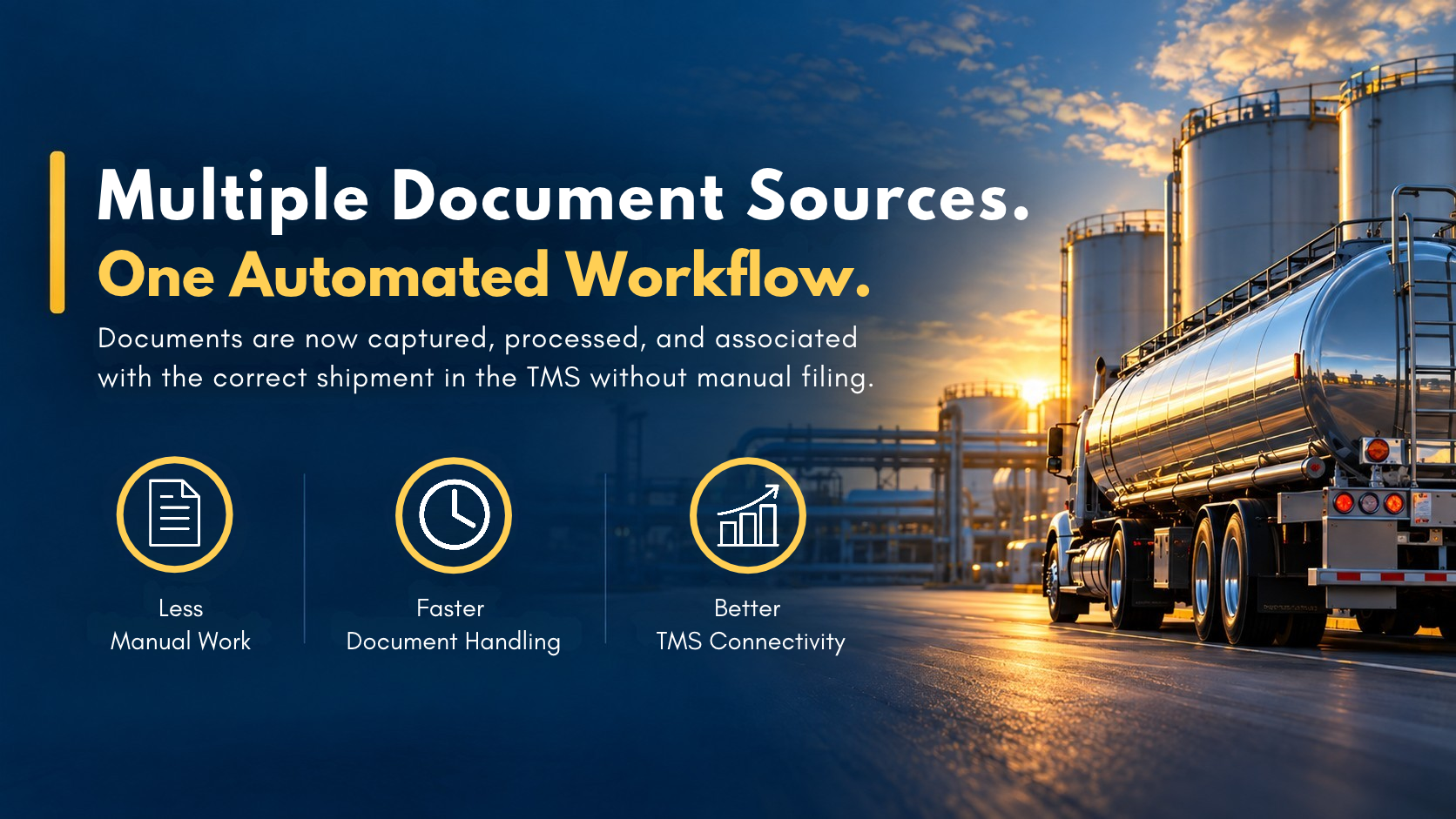
Documents can arrive by email, eFax, driver submission, or paper copy. Once received or scanned, the system processes them and assigns them to the appropriate shipment in the TMS.
Employees no longer have to manually review every document and determine where it belongs.
What was once a fragmented, hands-on process became a more automated workflow.
Documents can now move from receipt to the correct shipment in the TMS without an employee having to manually determine where each one belongs.
For the carrier, that means less time spent on repetitive administrative work and a process that better supports operations as documents move through the business.
Why This Matters for Trucking Companies
Manual processes can become part of the daily routine.
One employee checks an inbox. Another looks up a load. Someone attaches a document. The process works until volume grows, an employee is out, something gets missed, or the business decides there has to be a better way.
Technology can help, but only when it fits the operation.
This project wasn't about adding automation for its own sake. It was about removing unnecessary manual work from an existing process while ensuring the technology, TMS, integrations, and employees all worked together.
For small and mid-sized carriers without unlimited IT resources or extra people to throw at a problem, that matters.
Where GLCS Fits
From the outside, a project like this can look simple: replace a document imaging system and automate the process.
In reality, it can involve vendor selection, TMS integrations, testing, employee responsibilities, training, and coordination across multiple teams and technology providers.
That's where GLCS fits.
Our team understands both trucking operations and transportation technology. We help carriers work through the full project, including:
Testing
Whether a carrier has a large internal IT department or needs additional expertise to get a project across the finish line, GLCS can fill the gaps and help keep the work moving.
Is There a Manual Process Your Team Has Learned to Live With?
Sometimes the best automation opportunities aren't the biggest technology projects. They're the repetitive tasks employees deal with every day because that's simply how the process has always worked.
GLCS helps trucking and logistics companies identify those opportunities, evaluate the right technology, and manage the work from selection through implementation.
Need help with your project? Let us know.