
From 8 Hours to 15 Minutes: Closing the TMS Support Gap
How a mid-sized logistics provider strengthened support, solved complex system issues, and kept operations running in a customized TMS environment
Customer Overview
A mid-sized, asset-based and brokerage logistics provider was operating in a highly customized technology environment.
Their internal IT team was strong and capable, supporting day-to-day user needs and maintaining core systems. But as the business grew, so did the complexity of their technology stack, especially within their Transportation Management System (TMS) and surrounding integrations.
The Challenge
The company had outgrown traditional software support.
While their TMS provider handled standard issues, they struggled to support the company’s customized environment and evolving operational needs.
The internal team didn’t need basic help desk support. They needed experienced support for:
Integration failures between systems
System outages impacting operations
Custom workflows and non-standard use cases
Launching new business units within existing systems
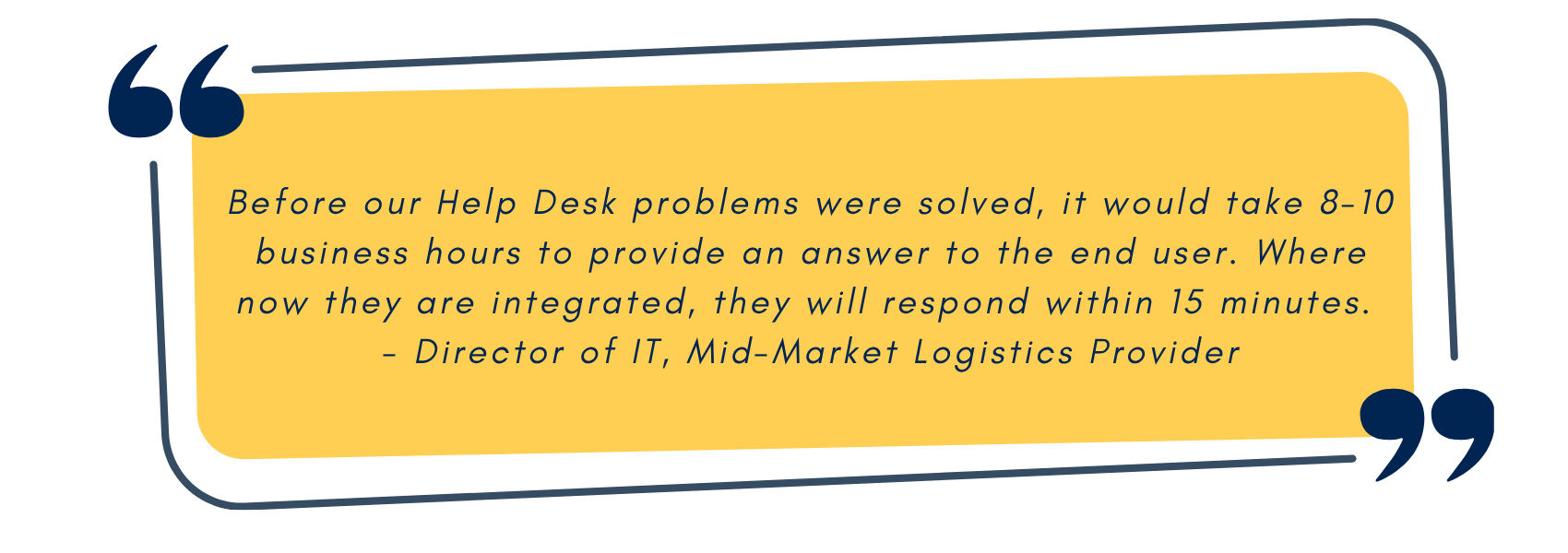
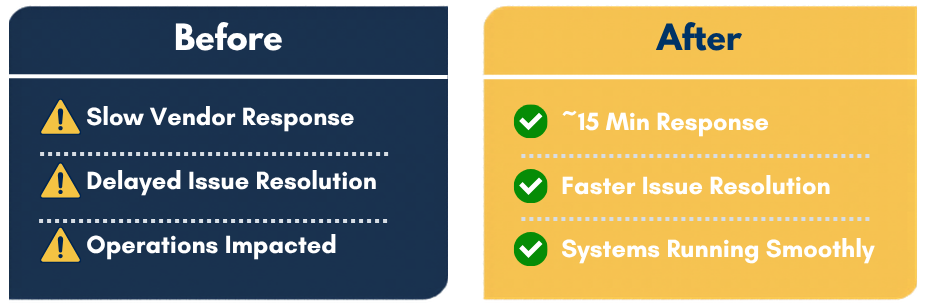
When issues escalated, response times from the vendor could take 8-10 business hours, creating delays that impacted both internal teams and day-to-day operations.
At the same time, many of the problems they were facing didn’t have clear solutions within the TMS itself.
The GLCS Approach
GLCS stepped in as an extension of the internal IT team, providing advanced, real-world support where standard vendor support fell short.
Acting as True Level 2/3 Support
GLCS worked alongside the internal help desk, taking on escalated issues that required deeper system knowledge and experience.
Instead of replacing internal resources, GLCS strengthened them, giving the team a reliable escalation path for complex challenges.
Supporting a Highly Customized Environment
Because the company had invested heavily in customization and in-house development, many issues required more than standard troubleshooting.
GLCS helped:
Diagnose and resolve integration issues across systems
Restore systems quickly during outages
Support new business rollouts within the existing environment
Provide guidance on how to extend the TMS beyond its intended design
In many cases, this meant designing solutions where none existed—leveraging existing system capabilities in new ways to meet operational needs.
Embedding into Their Workflow
GLCS integrated directly into the company’s ticketing system, allowing their team to respond in real time alongside internal support.
This removed delays and created a more seamless support experience for both IT and end users.
The Results
Faster Response, Less Downtime
Support response times improved from 8-10 business hours to approximately 15 minutes, allowing issues to be addressed before they disrupted operations.
Stronger Internal Team
With GLCS acting as an escalation layer, the internal help desk team was able to stay focused on day-to-day support while confidently escalating more complex challenges.
Solutions Beyond the Software
Instead of being limited by what the TMS could or couldn’t do, the company gained a partner who could:
Translate operational needs into technical solutions
Build workarounds for system limitations
Provide guidance on future technology decisions
A Partner Who Understands Trucking
One of the biggest differentiators was GLCS’s depth of experience across trucking, logistics, and transportation technology.
By combining real-world operational knowledge with technical expertise, GLCS was able to deliver solutions that actually worked in practice, not just in theory.
Where GLCS Fits
When standard support falls short, operations feel it fast.
GLCS works alongside internal teams to support the systems that keep freight moving, including:
Application Managed Services (AMS) to handle day-to-day system issues and escalations
Managed IT to support infrastructure, security, and uptime
Integrations & Implementations to connect TMS, ELDs, and back-office systems
Technology Advisory to help evaluate and select the right tools for the business
The goal isn’t to replace what’s already in place.
It’s to make existing systems work better, respond faster, and support the way a logistics business actually operates.