
What Came First, the Problem or the Tech?
Transportation companies spend a lot of money on technology. TMS platforms, visibility tools, automation, AI, carrier management, freight audit, CRM…you get the idea.
Most of these projects START for the right reason. A company has a problem. It hurts, and it typically creates strife throughout the organization. We've all heard our leaders (or maybe you've been the leader) say they want to grow without adding headcount, eliminate manual processes, improve visibility, increase margins, give customers a better experience, or simply stop running a multimillion-dollar operation through spreadsheets, email, and tribal knowledge.
Those are real problems worth solving.
But the problem isn't the technology (usually). It's that logistics companies start shopping for technology before they have clearly defined the problem they're trying to solve.
What Problem Are We Actually Trying to Solve?
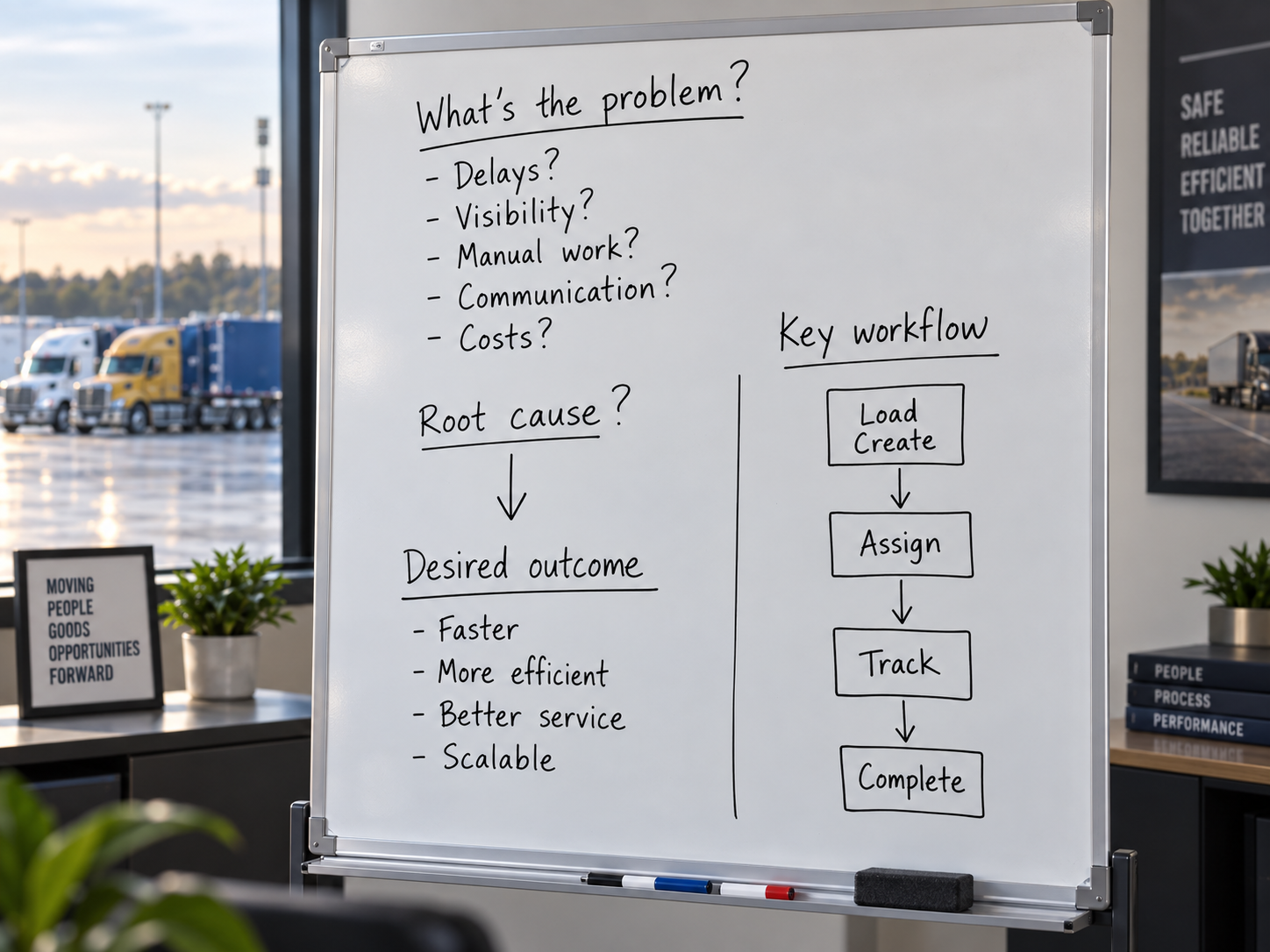
We've all been there in that Monday meeting: Someone sees a demo, meets a vendor at a conference, gets a recommendation from another company, or hears about a platform that's going to "transform" the business. Suddenly the conversation becomes about features, integrations, dashboards, and AI capabilities instead of asking the most basic question:
What business problem are we actually trying to solve?
If you can't answer that clearly, it's going to be very difficult to determine whether the technology you're buying actually solved it. And that's where technology projects can start going sideways before you've even selected the technology.
Not Every Requirement Deserves the Same Weight
We’ve seen companies build massive requirements lists with hundreds of features they want from a new platform.
I've also been handed a requirements list with just 23 items for a nine-figure operation. Neither extreme necessarily tells you what matters most.
The problem with a giant checklist is that everything starts to look equally important. Something that affects 60% of your operation gets the same checkbox as something three people use twice a month.
But then edge cases start driving the decision.
The buying process becomes a competition over who has the most features instead of which solution best addresses the problems costing the organization time, money, customers, or the ability to scale.
That's how trucking companies end up spending a lot of money replacing one system with another and discovering six months later that they're still dealing with many of the same problems.
There's also a cost that's harder to put on a spreadsheet.
Employees remember the last technology project that was supposed to make their jobs easier. When a company spends significant time and money on a new system and the same problems are still there, trust starts to erode. The next time leadership introduces a new initiative, getting people on board gets a little harder.
Technology Won’t Fix A Broken Process
The other mistake is assuming technology will fix a broken process. It won't.
Technology makes good processes faster, but it can also make bad processes faster.
If you have five unnecessary steps in a workflow today and automate all five, you haven't transformed the operation - you've automated waste.
Before selecting technology, organizations need to understand how work actually gets done, where the choke points are, which steps create value, which exist because "that's how we've always done it," and define how the process will need to look to be sustainable.
Start Before the First Vendor Demo
That's why we believe successful freight technology projects start well before the first vendor demo. They start by defining the business problem, understanding the current process, and determining what success actually looks like.
And "success" shouldn't simply mean that the new system went live.
It might mean reducing manual work, getting invoices out faster, improving visibility, giving employees better information to make decisions, improving margins, or allowing the company to grow without adding the same amount of overhead.
Whatever the goal is, define it before you start shopping.
Before the first demo, you should be able to answer a few basic questions:
What problem are we trying to solve?
Who is impacted by it?
What is it costing the business today?
What should the process look like in the future?
How will we know we've actually improved it?
Technology selection should be the result of that work, not the beginning of it.
When companies reverse that order, they're often setting themselves up for an expensive lesson.
Written by Robert Bain, Director of Partnerships and Senior Consultant at GLCS. Robert brings nearly 20 years of transportation industry experience spanning operations, leadership, business processes, and technology.